Rebuilding Support for 700+ Attract Clients
00 / Overview
Project Overview
Following an acquisition, our team inherited a legacy website platform called Attract supporting over 700 clients—along with a support system that lacked clear ownership, consistent processes, and reliable documentation.
I took full ownership of stabilizing the experience—reworking how support was routed, defining processes, and building the documentation needed to create structure. From there, I scaled the system through centralized intake and ticketing, ultimately transitioning support to the Client Experience team and removing dependency on a single point of ownership.
My Role
Led support and operational restructuring for 700+ active clients while continuing responsibilities as a Fulfillment Manager.
Took ownership of Attract support and routing redesign.
Mapped support paths across phone, email, and chat.
Built documentation, workflows, and transition processes for scale.
Timeline
Q3 2023 – Q2 2024 (12 Months)
01 / The Problem
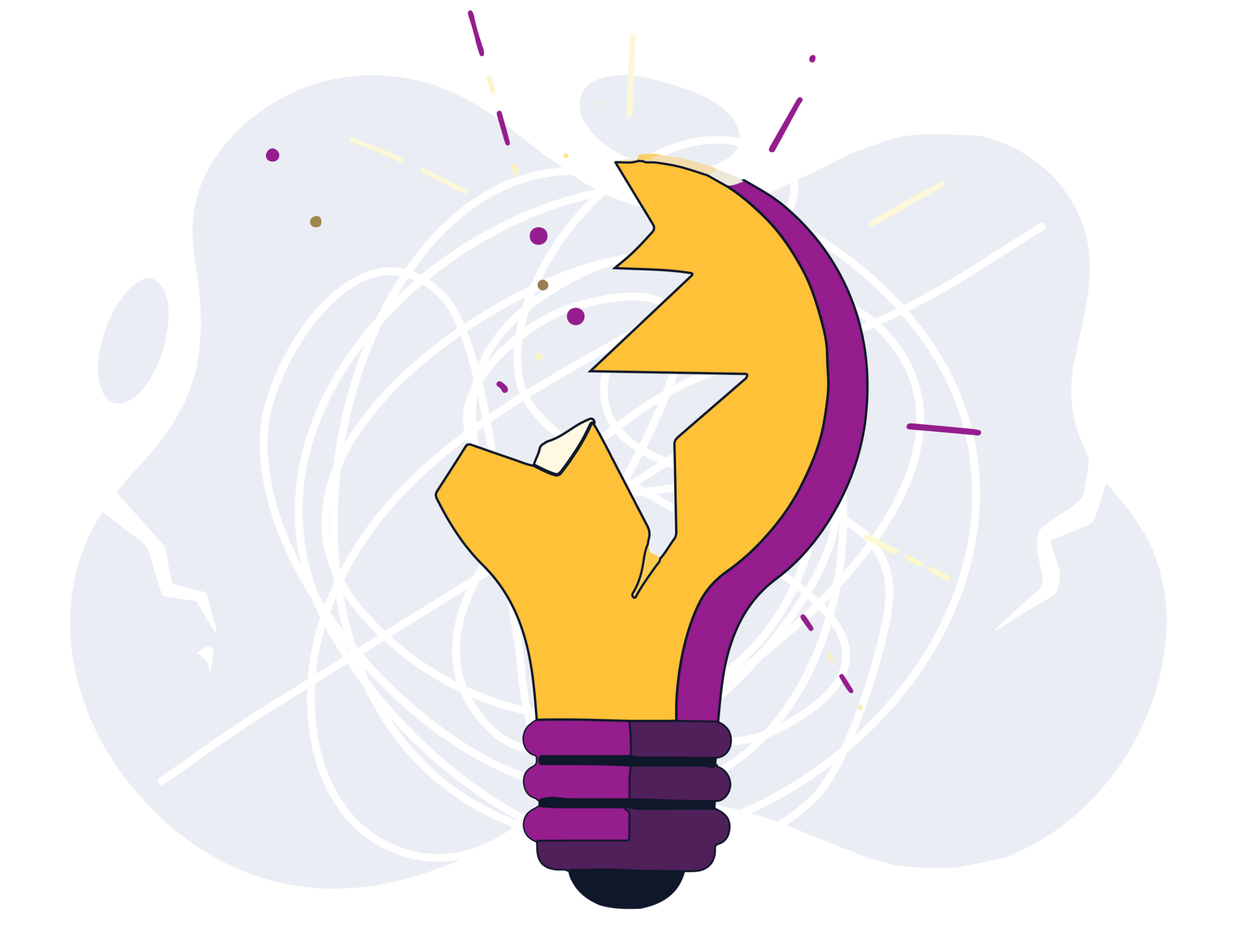
A Tangled Web of Support Requests
The support experience operated in a fragmented and chaotic state:
- Inconsistent support routing and dropped requests.
- No clear ownership across teams.
- Limited documentation or shared knowledge.
- Frequent misrouted requests and delayed responses.
- Increasing support demand during platform decline.
Clients often reached the wrong team depending on how they contacted us, creating confusion and slowing down resolution. Internally, support relied heavily on tribal knowledge, making it difficult to deliver consistent outcomes.
02 / Discovery
Mapping the Chaos
To understand the problem, I met with over 20 stakeholders across teams and mapped the existing support experience across phone, email, and chat.
This revealed a system with no clear intake, inconsistent routing logic, and unclear ownership—resulting in an unpredictable experience for both clients and internal teams. The core issue wasn’t tooling—it was a lack of structure.
In addition, I identified a lack of shared documentation, with key processes and knowledge held by a few individuals.
What I Found
Unclear ownership for support requests.
Inconsistent support routing across all channels.
Critical knowledge lived with individuals, not teams.
Limited documented processes for consistency.
03 / Architecture
System Design — Centralized Intake
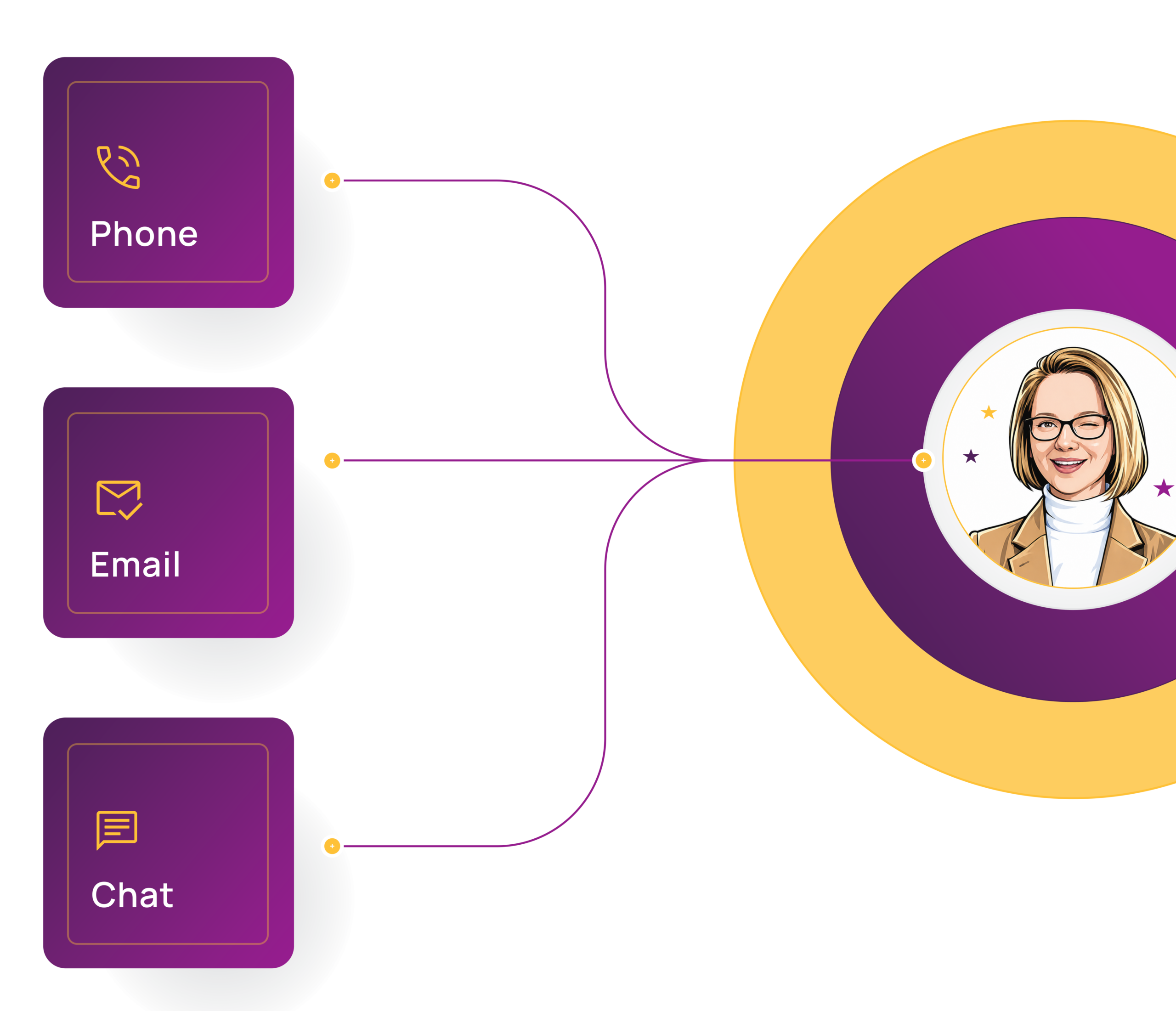
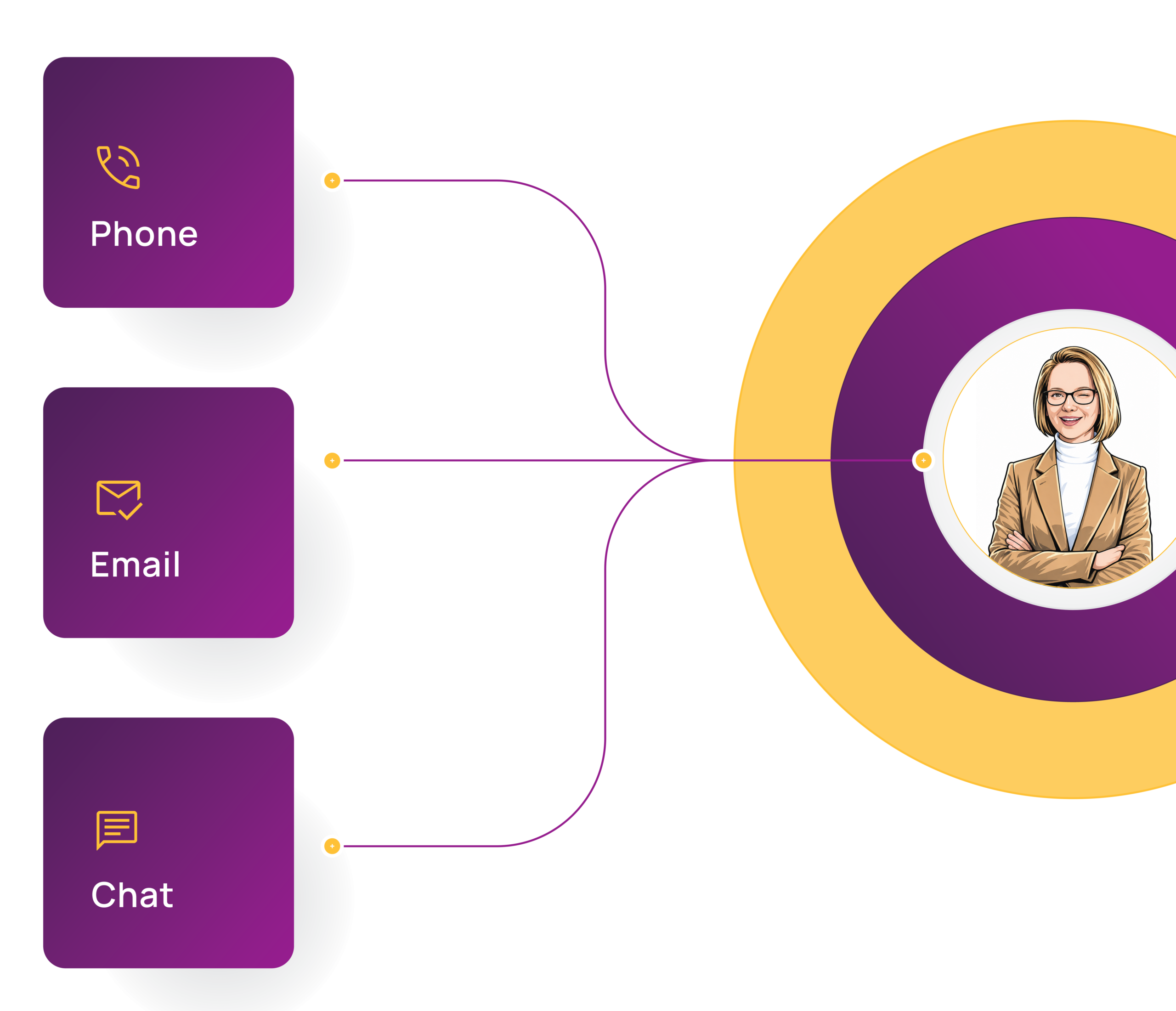
To stabilize the experience, I redesigned the support model around a centralized intake layer.
Instead of requests entering through disconnected paths, all communication—regardless of entry point—was routed through a single point of ownership. This created a consistent starting point for every request and eliminated ambiguity around where support should begin.
By introducing this intake layer, the system shifted from fragmented and reactive to structured and predictable.
04 / Impact
System Expansion
Understanding the System — Documentation & Knowledge
With all requests flowing through a centralized intake, I was able to engage directly with client issues and understand how the platform functioned in real-world use.
This hands-on exposure further revealed gaps in ownership, inconsistencies in workflows, and missing documentation. As I supported clients, I translated this knowledge into structured documentation—defining request types, outlining processes, and establishing clearer expectations.
This not only improved consistency internally, but also created a more reliable and responsive experience for clients.

Operational System – Routing + Process Redesign
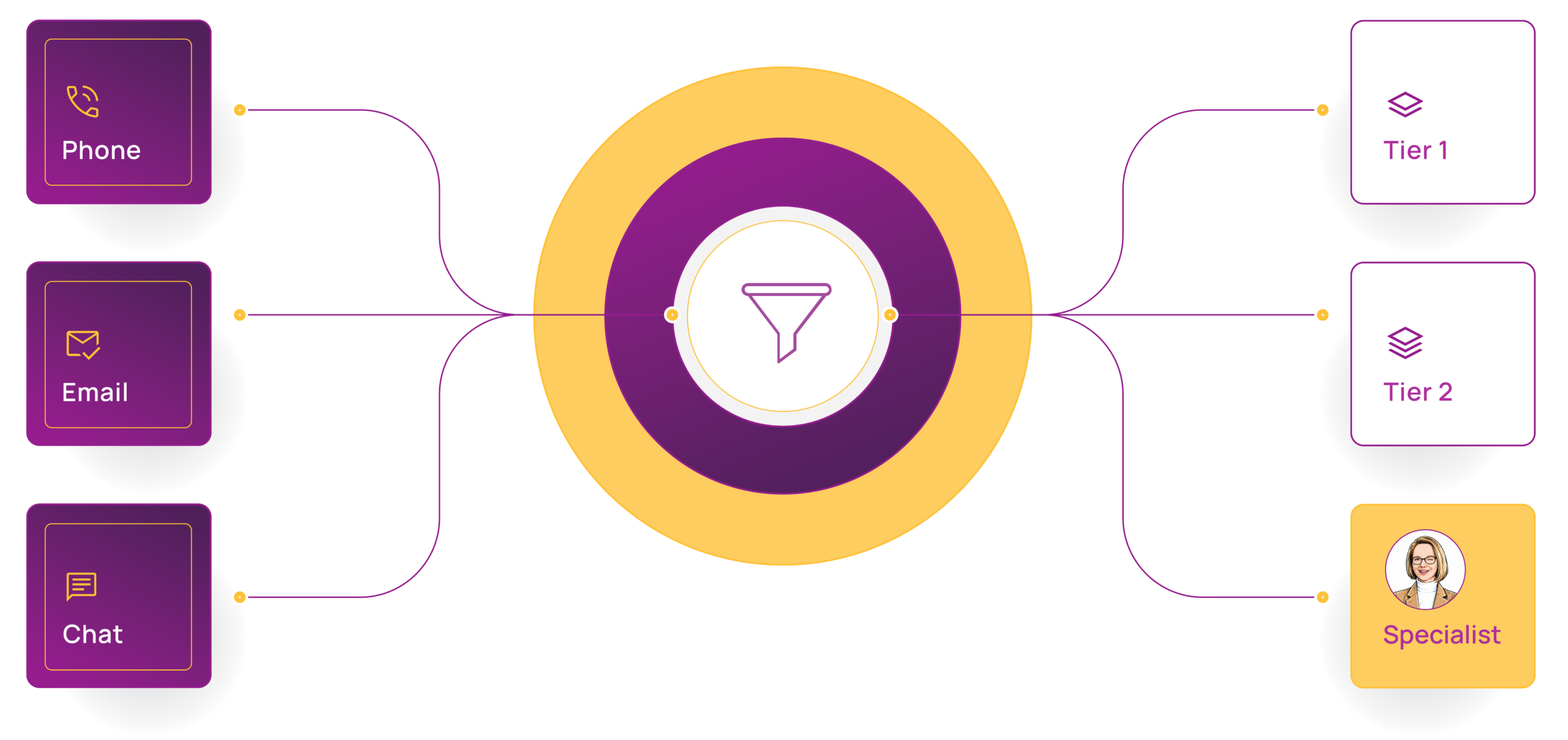
Designing the model was only part of the solution—existing routing behaviors and outdated structures still caused requests to be misdirected.
To address this, I mapped the full support experience across phone, email, and chat to identify where breakdowns occurred. I then implemented updated routing processes across the organization, ensuring all requests were consistently directed through centralized intake regardless of how clients reached out.
This reduced misrouting, improved response consistency, and established a reliable foundation for scaling support.
From Fix to Scale – Growing the System
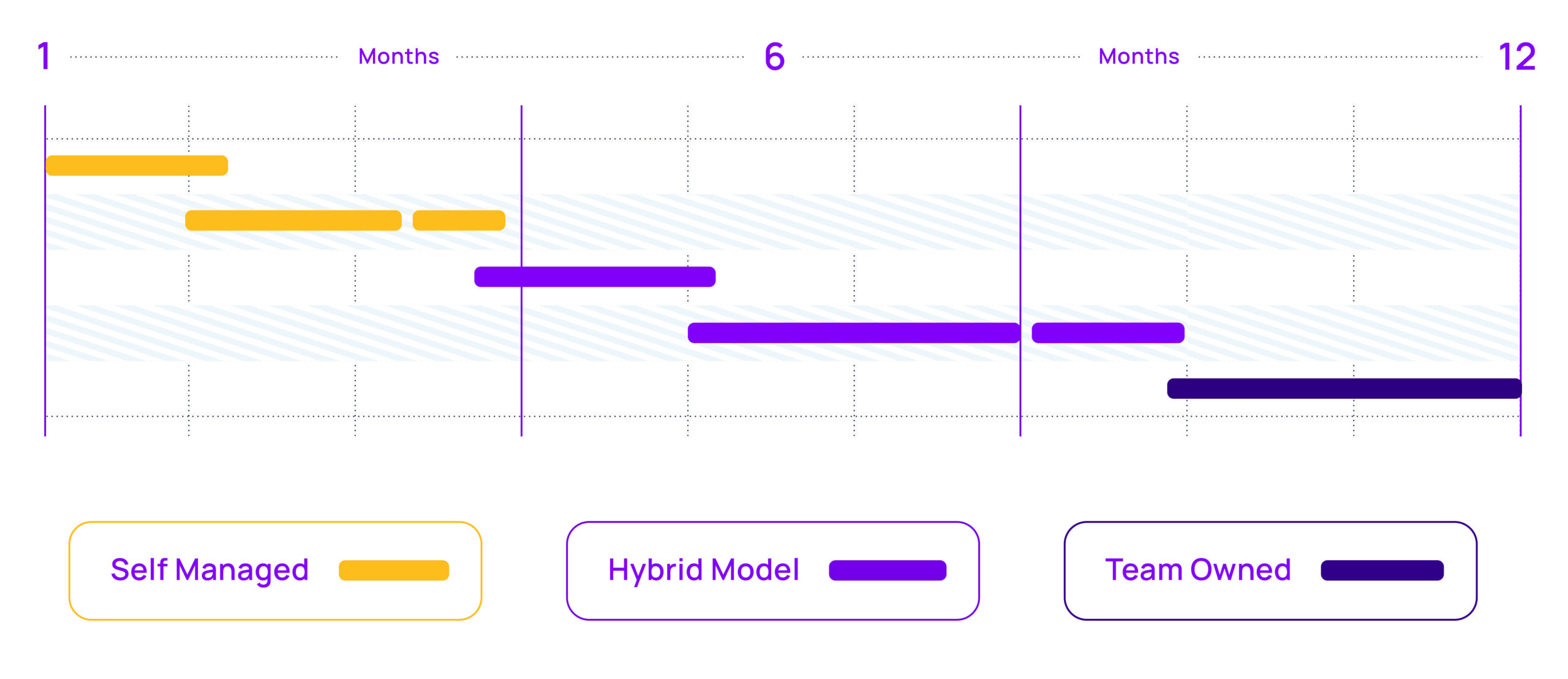
With a stable system in place, the next step was ensuring it could scale beyond a single point of ownership.
I introduced a unified ticketing system to manage requests across all products and developed processes and documentation to support a gradual transition to the Client Experience team. By six months, support responsibilities were partially distributed, and by one year, the system operated independently—transforming a fragile, person-dependent process into a sustainable, team-driven model.
05 / Transformation
Before vs After
Before – Fragmented Support Experience
Multiple entry points led to inconsistent routing, unclear ownership, and frequent delays.
Unclear ownership
Misdirected requests
Reactive support
Before – Centralized & Scalable System
A single intake path created structured routing, consistent handling, and a foundation for scale.
Centralized intake
Documented workflows
Team-owned support
Centralizing support at scale shifted the experience from reactive and fragmented to structured and predictable—restoring consistency and rebuilding client trust.
06 / Impact
Impact at a Glance
700+ Clients
Supported
Stabilized support during platform transition.
Centralized Intake Established
Unified phone, email, and chat into a single, consistent entry point.
Unified Ticketing
System
Introduced structured tracking across all support and products.
Full Team
Transition
Successfully transitioned ownership to the Client Experience team.
Final Outcome
The outcome established a clear operational foundation, enabling more consistent support and a smoother path toward platform transition.
- Centralized support routing across phone, email, and chat.
- Eliminated misrouted client requests.
- Established a unified ticketing system across products.
- Improved consistency and clarity in client interactions.
- Successfully transitioned support ownership to the Client Experience team.
- Maintained support for 700+ clients during transition.
The Takeaway
Systems don’t fail because of tools—they fail because of unclear ownership and structure.
By introducing clarity, documenting knowledge, and designing for scale, a fragmented support experience became a reliable, sustainable system.