

InstaForest

Overview
InstaForest emerged as a product-focused extension of the Tropical Carbon brand. What initially began as a single website evolved into two distinct digital experiences, each serving a different purpose within the same ecosystem.
As an early contributor to the startup, the decision was made to separate concerns:
– Tropical Carbon would function as the informational and educational platform.
– InstaForest would become the transactional, product-driven experience—focused on purchasing and planting trees, then sharing that impact socially.
The Challenge
The original single-site structure attempted to balance education, brand storytelling, and product conversion in one experience. This diluted clarity, weakened conversion paths, and created friction for users who arrived with specific intent—either to learn or to act.
The Goal
Design two distinct yet complementary websites, with instaForest operating as a conversion-first product experience while remaining visually and strategically aligned with the broader Tropical Carbon brand.
Project
InstaForest Web Design
My Role
UI/UX Design, Web Design, Graphic Design
Tools
Adobe CS · WordPress · Figma · HTML · CSS
Problem & Approach
Users engaging with the original site arrived with different motivations: some wanted to understand Tropical Carbon’s mission, while others wanted to purchase trees and share their impact. Housing both intents in a single experience created cognitive overload and blurred priorities.
From a business perspective, the lack of separation weakened the product’s ability to convert users who were ready to take action.
The approach was to unbundle intent. By separating the informational experience from the transactional one, each site could be designed around a single, clear purpose. instaForest was reframed as a product and participation platform, guiding users toward purchasing, planting, and sharing with minimal friction—while Tropical Carbon retained the role of education and credibility-building.
Research & Insight
This project relied on competitive review and early-stage product understanding. Key insights included:
- Users engage differently with mission-driven content versus transactional experiences.
- Product-focused sites benefit from bold visuals, emotional reinforcement, and clear action paths.
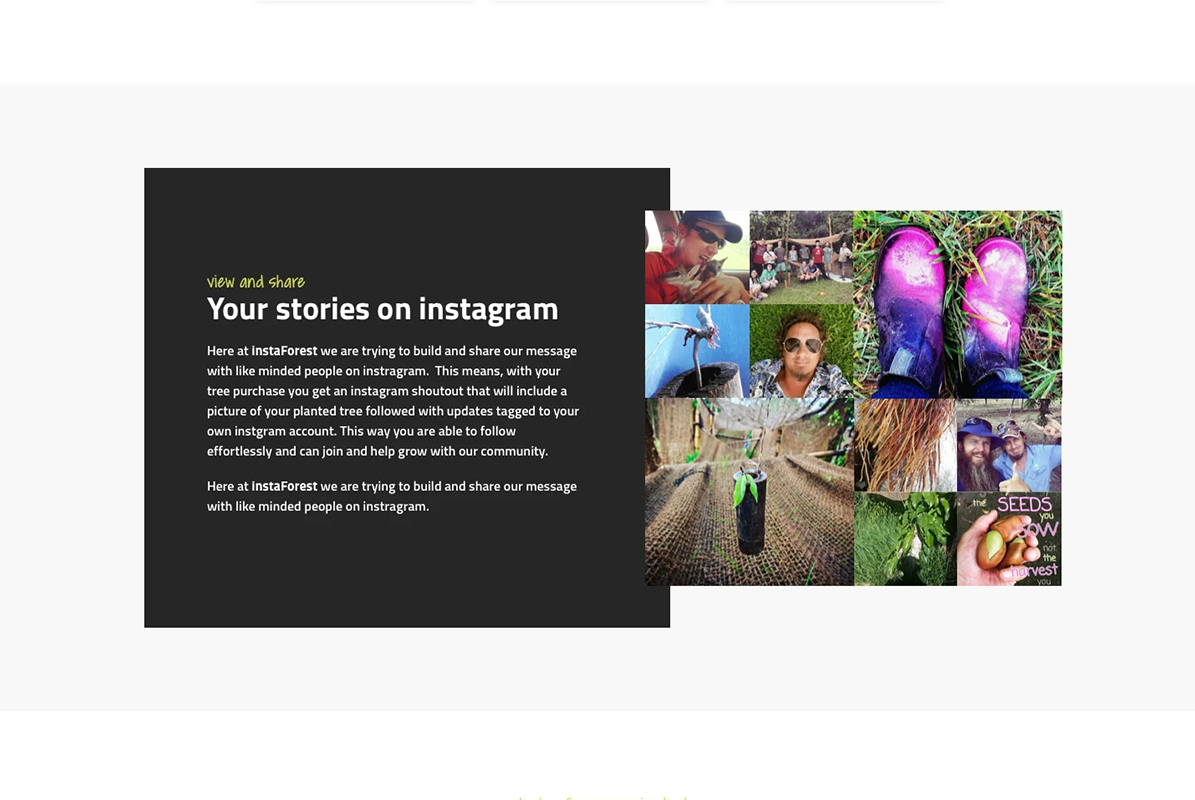
- Social sharing is more effective when integrated into the core experience rather than treated as an afterthought.
These insights supported the decision to make instaForest more expressive, visual, and action-oriented than its parent brand.
Design Decisions
The UX Strategy
Design instaForest as a bold, conversion-led experience that complements—rather than competes with—the Tropical Carbon informational site.The site was designed in Sketch and implemented using WordPress with Visual Composer, balancing flexibility with scalability for a growing startup.
Content Simplification
Clear functional distinction between education and action.
Conversion Focus
Streamlined flows centered on purchasing and planting trees.
Social Reinforcement
Create an experience around sharing on Instagram to expand and enhance engagement.
Brand Continuity
Maintaining visual and tonal alignment so all products feel connected.

Project Outcome
The result was a two-site ecosystem where each platform could excel at its primary role. For instaForest, this meant:
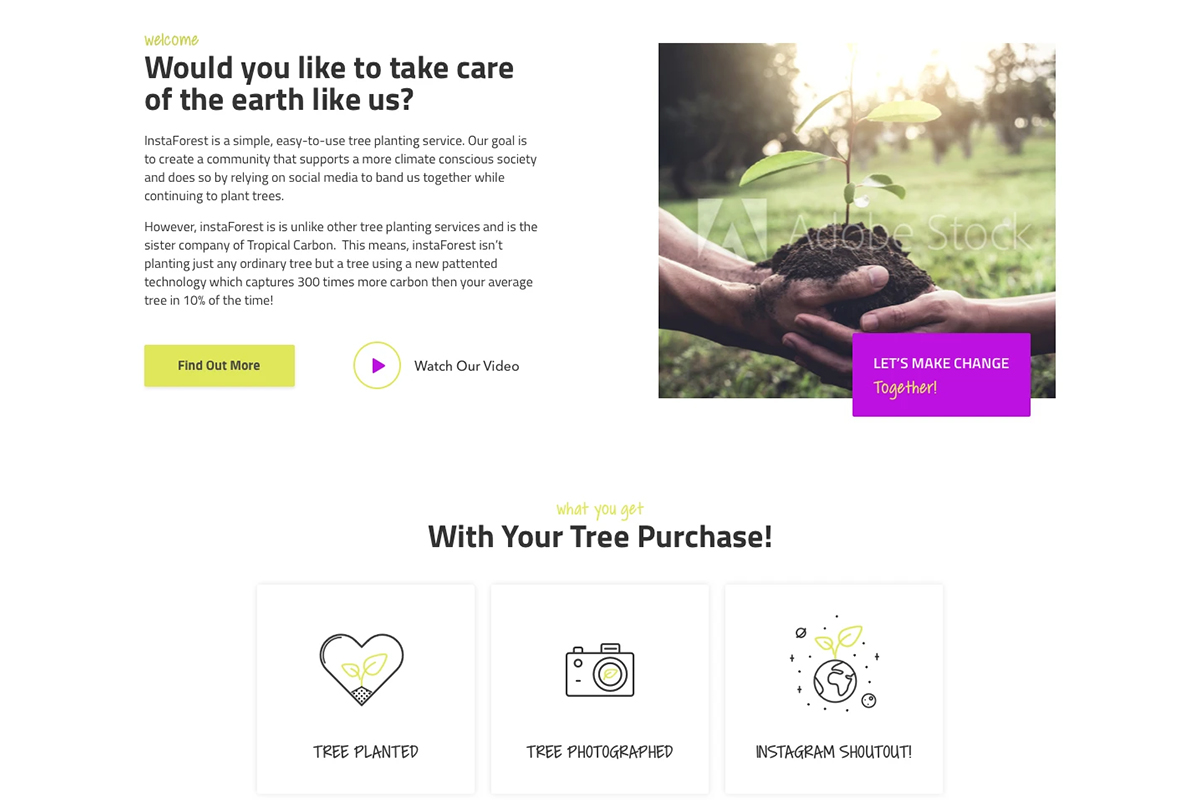
- A focused product experience centered on action and participation.
- A visual identity that feels bold, optimistic, and emotionally engaging.
- Clear pathways from purchase to impact to social sharing.
By allowing Tropical Carbon to handle education and credibility, instaForest could remain lightweight, expressive, and conversion-driven without overexplaining.



The Result
instaForest now functions as a dedicated product experience designed to turn intent into action. The site supports users who arrive ready to participate by removing competing information and emphasizing clarity, emotion, and immediacy.
By separating intent and designing each platform around a singular purpose, the overall brand became stronger—and the product experience became more effective, confident, and human.